
How to Count Calories: A Beginner's Guide
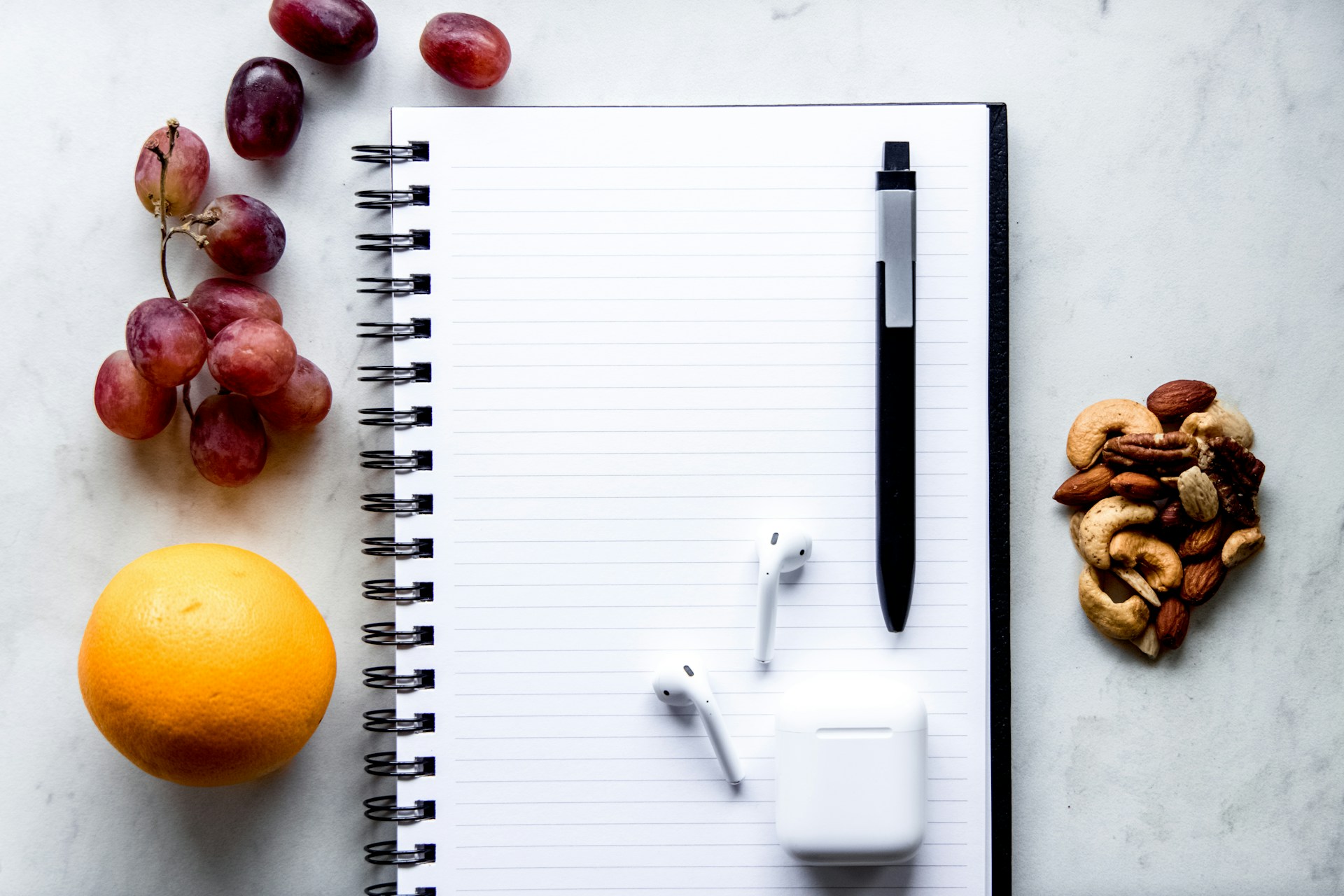
To count calories, write down everything you eat and drink, find the calories for each item on its label or in an app, and add them up for the day. Start by counting a normal day without changing anything. Then set a daily target and look for places to cut. The NHS suggests this order, so you can see where your calories come from first.
In brief
- The NHS recommends about 2,000 calories a day for women and 2,500 for men to stay at a healthy weight. To lose weight, it suggests eating about 600 fewer than you do now.
- Labels list calories per serving, per portion, or per 100 g. The amount you eat may be bigger than the label's.
- In one study, people who lost the most weight opened their food diary about 2.7 times a day.
- If you have a medical condition, follow a special diet for your health, or have had an eating disorder, talk to a doctor (GP) first.
How do you start counting calories?
- Pick an app or a notebook. Both work, as we explain below.
- Count a normal day. Write down everything you eat and drink on a typical day, without changing anything.
- Set a daily target. As a rough guide, the NHS uses 2,000 a day for women and 2,500 for men to stay the same weight. Our maintenance calorie calculator works out your own number.
- Weigh your portions for the first week or two, to check your usual servings.
- Log as you go, through the day.
- After a few weeks, check your weight trend. If it isn’t moving the way you want, re-run the calculator with your current weight, or cut a little more.
To lose weight, you need a calorie deficit. The NHS suggests eating about 600 calories a day less. It suggests spreading the cut across the day. For example, 100 less at breakfast, 200 at lunch, 200 at dinner and 100 from snacks. If 600 feels like a lot, start smaller. Our calorie deficit calculator starts gentler, at 250 to 500.
How do you read calories on a food label?
In the US, the Nutrition Facts label shows Calories for one serving. Above it, you’ll see the serving size and the number of servings in the pack. The FDA gives a lasagna as an example: one serving is 280 calories, but the whole pack is 4 servings, so eating it all is 1,120 calories.
In the UK, labels show calories as kcal, usually per 100 g or 100 ml, and often per portion too. We explain the rest of the label in why are nutrition labels so confusing. The NHS uses rice as an example. If a pack says a 75 g (about 2½ oz) portion is 260 calories, and you cook 150 g (about 5 oz) of dry rice for yourself, you’re eating 520 calories.
Either way, the amount on the label may not be the amount you eat. That’s why the NHS suggests weighing food, before you cook it, while you’re starting out. You don’t need to do it forever. Our posts on weighing food raw or cooked and whether you need to weigh food at all go into more detail.
How do you count calories in home-cooked meals?
Add up the calories in every ingredient you used, including the oil, then divide by the number of portions.
- Write down each ingredient and how much you used.
- Find the calories for each one, from its label or an app.
- Add them up for the whole dish.
- Divide by the number of portions you served.
Most apps let you save a recipe, so you only do this once. For eating out, our post on whether restaurant calorie counts are accurate explains how close menu numbers tend to be.
How often should you log your food?
Log as you go, a few times a day. One 2019 study followed 142 adults on a 6-month online weight loss programme. By month six, people who lost 10% or more of their weight opened their food diary about 2.7 times a day. People who lost less than 10% opened it about 1.7 times a day.
Logging also got quicker with practice. In the first month, people spent about 23 minutes a day on it. By month six, it was about 15.
This study shows a link, not proof that logging more often causes more weight loss. Most people in it were women living with obesity, on a guided programme, so your results may differ.
Can you count calories without an app?
Yes. You can use the calories on food packets and keep a food diary. The NHS suggests both.
- Keep a notebook or a note on your phone.
- For each meal, write down what you had and roughly how much.
- Find the calories on the label, and work them out for your portion.
- For foods without a label, like fruit, use a supermarket website, or in the US, the USDA’s FoodData Central. For home cooking, follow the recipe steps above.
- Add up the day at the end.
It takes longer than an app, mostly because an app adds things up and remembers foods you eat often. It works, and some people prefer seeing it on paper.
If you’d rather use an app, many are free. We compared the best free calorie counter apps, including which ones scan barcodes for free.
What are the most common calorie counting mistakes?
- Forgetting drinks. The NHS reminds you to count alcohol, fizzy drinks (soda) and juices.
- Missing cooking oil and spreads. A tablespoon of oil is about 120 calories. Our post on cooking oil calories explains how much to count.
- Leaving out toppings and sauces, like cheese, yoghurt, mayo and ketchup.
- Guessing portions from memory. It’s easy to underestimate how much you’ve eaten, as we explain in why do I underestimate how much I’ve eaten.
- Judging by one weigh-in. Your weight moves up and down from day to day, so compare weekly averages. We explain why in why does my weight change every day.
When can you stop counting calories?
The NHS says that once you reach a weight that’s healthy for you, you can stop recording every meal. It suggests keeping an eye on how your body feels, staying active and eating a balanced diet instead.
Some people stop sooner, once they have a good feel for their usual meals. We look at how long people tend to track in how long do you have to track calories.
Talk to a doctor (GP) or healthcare professional first if you have a medical condition or a special diet for your health. The same goes if you have, or have had, an eating disorder. If counting starts to make you anxious, it’s fine to take a break.
Where Ori fits
Ori gives you a starting calorie target and lets you log food and weight for free. Our Stealth Health mode is also free. It hides the numbers and tells you how you’re doing in plain words. With Premium, you can log by chat, photo or label scan, and Ori adjusts your target as your weight changes. You can try Ori here.
Related reading
- How many calories should a woman eat a day?
- How many calories should a man eat a day?
- Why do people quit calorie tracking?
Sources
- NHS Better Health. Calories and weight loss, checked 2 November 2026.
- US Food and Drug Administration. How to understand and use the Nutrition Facts label, checked 2 November 2026.
- USDA FoodData Central, checked 2 November 2026.
- Harvey J, Krukowski R, Priest J, West D. Log often, lose more: electronic dietary self-monitoring for weight loss. Obesity, 2019.
A gentle safety note
Ori supports general wellness. It is not medical care. If you have a history of disordered eating, are pregnant or breastfeeding, take medicines that affect weight or appetite, or have a clinical nutrition need, speak with a qualified healthcare professional before changing your intake or weight goal.
Read Ori's Health Disclaimer