
Should You Eat Back Your Exercise Calories?
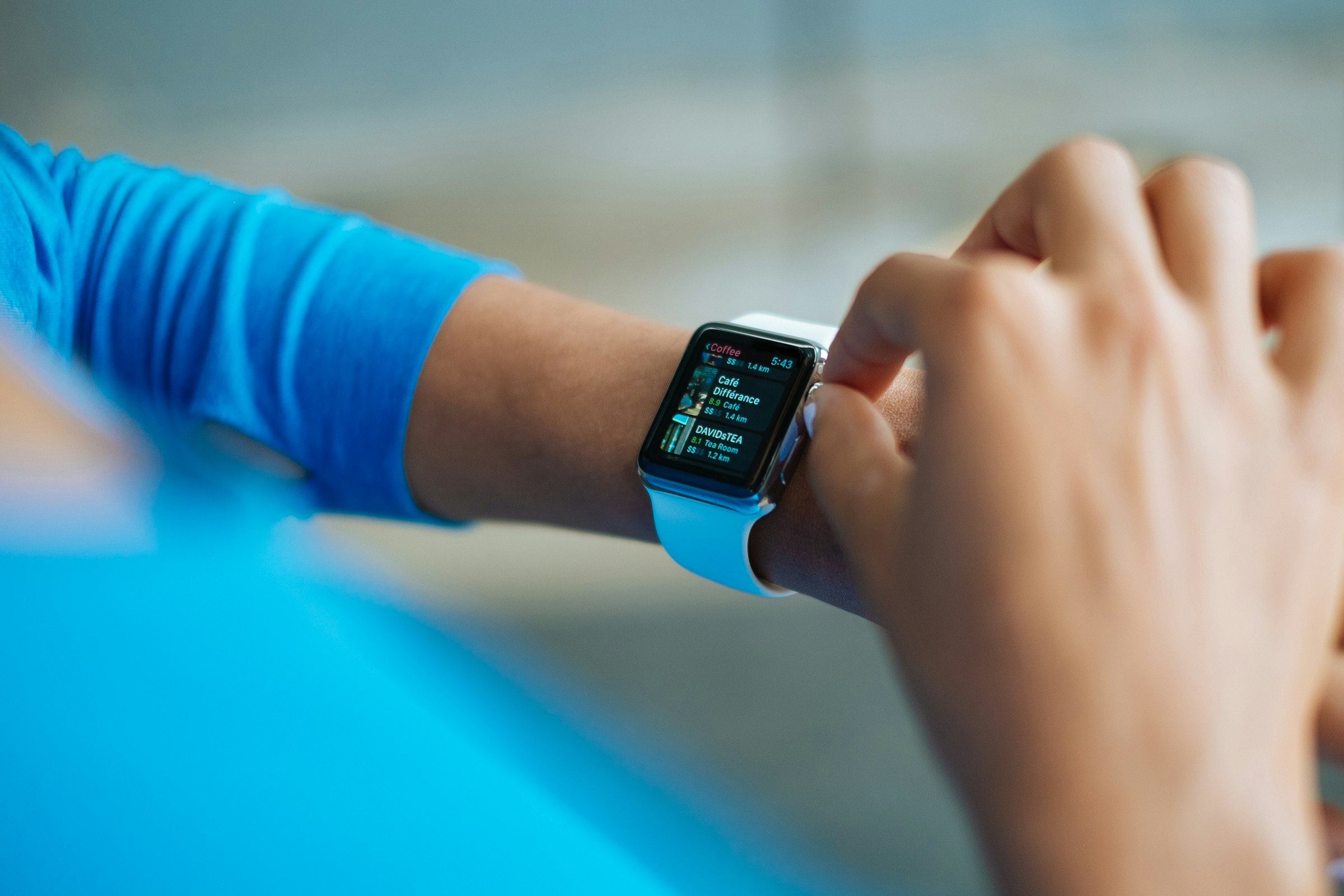
It depends on how your target was set. If it already includes your usual workouts, eat none back. If workouts are added on top, eat some back. If your app adjusts your target from your weight, there’s nothing to add. Don’t trust the exact figure, in a 2017 Stanford test, no wrist device got calorie burn within 20% on average.
In brief
- If your target already counts your workouts, eating them back counts them twice. Apps word this differently, so check how yours sets its target.
- A 2017 Stanford study tested seven wrist devices on 60 adults. Six measured heart rate within 5% during cycling, but none had an average calorie error below 20%.
- A 2024 umbrella review in Sports Medicine, drawing on 249 validation studies, found wearables underestimated calories burned by about 3% on average, with estimates ranging from about 21% under to 15% over.
- In a 2016 study, 70 adults did the same exercise and were told they'd burned either 50 or 265 calories. The group told 265 ate more at a test meal afterwards.
- Your weight trend over several weeks reflects what you ate and burned, so it can tell you whether you need more food without trusting any single burn figure.
Does your calorie target already include exercise?
Apps set calorie targets in a few different ways, and the difference decides whether eating exercise back makes sense. Some include your usual workouts in the target from the start. Some ask about your daily life without exercise, then add workouts on top as you log or track them. Others adjust your target over time from how your weight moves, so there’s nothing to add. Many ask how active you are when you sign up, but the wording varies and “active” doesn’t mean the same thing everywhere, so check your app’s own settings or help page to see which kind you have.
| How your target was set | What to do with exercise calories |
|---|---|
| It already includes your usual workouts | Don’t eat them back, unless you do much more than usual |
| It covers daily life, with workouts added separately | Eat some of the workout back, then check your weight trend |
| It adjusts from your weight over time | Nothing to add, because the target moves instead |
Which of these applies depends on your app. Watching your weight trend applies to all three.
If you do eat some back, use the workout’s own figure. Some watches show both active and total calories for a workout, and total includes the energy you’d have used sitting still anyway, so eating it back double-counts your resting burn whatever kind of target you have. On some devices the day’s active calories also include all your everyday movement, which a target covering daily life has already allowed for.
How accurate is the calorie burn on a fitness tracker?
A 2017 Stanford study by Shcherbina and colleagues put 60 adults through sitting, walking, running and cycling while they wore seven wrist devices available at the time, including an Apple Watch and a Fitbit. The readings were compared with lab equipment measuring heart rate and the oxygen the body uses. Six of the seven measured heart rate to within 5% during cycling. None had an energy expenditure error, the calorie figure, below 20% on average. Device error overall was higher for men, for people with a higher body mass index, for people with darker skin, and during walking.
A 2024 umbrella review in Sports Medicine by Doherty and colleagues drew on 24 earlier reviews covering 249 validation studies. It found wearables underestimated calories burned by about 3% on average, with estimates ranging from about 21% under to about 15% over, and some studies, like the Stanford one, found larger errors still. The lean in one direction is small next to the spread, and a single reading doesn’t tell you which way yours is off.
The same review found only about 11% of wearables on the market had been validated for at least one measurement. On current models, a January 2026 review of Apple Watch research in npj Digital Medicine found eight studies that tested its calorie figure, with 270 people between them, and five of the eight used a Series 2 or older. Average error ranged from about 10% during running to about 150% during walking, and all six studies that reported it as a percentage found 20% or more in at least one test condition. Newer watches may be better, but there isn’t much independent evidence either way.
| Study | Who or what | What it found |
|---|---|---|
| Shcherbina et al., Journal of Personalized Medicine, 2017 | 60 adults, seven wrist devices, lab testing | Heart rate mostly within 5% when cycling. No device’s average calorie error below 20% |
| Doherty et al., Sports Medicine, 2024 | 24 reviews, 249 validation studies | Calories burned about 3% under on average. Estimates from about 21% under to 15% over |
| Apple Watch review, npj Digital Medicine, 2026 | 8 calorie studies, 270 people | Average error from about 10% when running to about 150% when walking. Five of eight studies on Series 2 or older |
| Willbond et al., Journal of Sports Medicine and Physical Fitness, 2010 | 16 young adults on a treadmill | Guessed their burn at three to four times the measured figure |
| McCaig et al., Appetite, 2016 | 70 adults, identical exercise | Those told they’d burned 265 calories ate more at a test meal than those told 50 |
Accuracy and eating studies on exercise calorie figures. Full references are listed under Sources.
Does seeing a calorie burn make you eat more?
There’s some evidence it can, though it comes from small lab studies.
In a 2010 trial by Willbond and colleagues, 16 young adults did treadmill sessions that burned a measured 200 or 300 calories. Asked how much they’d burned, they guessed three to four times the real figure. When the researchers then asked them to eat exactly that amount from a buffet, they ate two to three times what they’d really burned. That study tested people’s own guesses, not a device, and the eating was something they were told to do, so it shows how far off guesses can be more than how people behave on their own.
A 2016 study in Appetite by McCaig and colleagues had 70 healthy, mostly lean adults do the same exercise, estimated to burn about 120 calories. Half were then told they’d burned 50 calories and half that they’d burned 265, neither of which was accurate. At a test meal of juice, tortilla chips and chocolate chip cookies, the group told 265 ate more, mostly in cookies. There was tentative evidence the effect was stronger in people who were less restrained about food, and the authors suggested calorie burn figures in apps could be counterproductive for weight management.
Two small lab studies can’t tell us how most people behave day to day, but they’re a reason to be wary of letting a burn figure decide how much you eat.
How much of your exercise calories should you eat back?
If your workouts are added on top of your target, you’ll often see advice to eat back about half. There are two reasonable grounds for it. People tend to overestimate what exercise burned, as in the Willbond study, and being shown a bigger burn figure can nudge people to eat more, as in the McCaig study. Eating back half leaves room for both. The tracker’s own error runs in both directions, so on its own it isn’t a reason to eat back less.
Say your watch says a workout burned 500 calories, and the real figure could plausibly be 30% either side of that, anywhere from 350 to 650. Eat all 500 back and you might put back 150 more than the workout used, or 150 less. Eat half back and you’ve put back somewhere between 100 and 400 less than it used. Whether that matters depends on your goal and on how big a deficit or surplus your target already builds in.
Your weight is a better check than any fixed fraction. Eat roughly consistently for a few weeks, then look at where your weight is heading and how fast. The scale reflects what you ate and what you burned, the workout included, and it doesn’t depend on the watch being right.
Day to day, the readings are noisy. Weight swings with water, and starting a new exercise routine can hold extra water for a while, which can hide progress early on. If you have periods, comparing the same point in your cycle a month apart tells you more than comparing readings two weeks apart. The scale also sees what you ate, whatever you logged, so if your logging drifts, the trend will show it. If the trend is heading the way you want at a steady pace, your intake is about right. If not, change it a little and look again.
If you’re training hard and losing weight faster than you meant to, or feeling unusually tired or recovering poorly, those can be signs you’re not eating enough for your training.
Does this change if you are trying to gain weight?
If your target covers daily life and you add workouts on top, eating back only half cuts into your surplus, and you can end up at maintenance without realizing. Since trackers undercount a little on average, eating back the full workout figure makes more sense when you’re trying to gain, as long as your weight trend confirms it’s working.
Your everyday movement can shift too. Walking, standing and fidgeting, known as non-exercise activity thermogenesis or NEAT, rises in some people when they eat more, which can slow gaining, and a wrist device won’t pick all of it up.
How Ori handles exercise
In Ori, you don’t eat exercise calories back, because there’s nothing to add. Ori doesn’t add exercise calories to your allowance or read calorie estimates from a watch. It adjusts your target over time from your weight and food trends, not from a watch’s burn estimate. Because a trend takes time to form, changes show up over a few weeks, including after a big change in training. You can keep your watch for heart rate and steps.
Have a look at Ori if that sounds easier than second-guessing your watch.
Sources
- Accuracy in Wrist-Worn, Sensor-Based Measurements of Heart Rate and Energy Expenditure in a Diverse Cohort — Journal of Personalized Medicine (Shcherbina et al., 2017) — 60 adults, seven devices, laboratory testing against telemetry and indirect calorimetry
- Keeping Pace with Wearables: A Living Umbrella Review of Systematic Reviews Evaluating the Accuracy of Consumer Wearable Technologies in Health Measurement — Sports Medicine (Doherty et al., 2024) — 24 systematic reviews covering 249 validation studies; energy expenditure mean bias about −3%, range −21.27% to 14.76%
- The accuracy of Apple Watch measurements: a living systematic review and meta-analysis — npj Digital Medicine (2026) — 82 studies overall; energy expenditure evidence from 8 studies and 270 participants, five on Series 2 or older
- Normal weight men and women overestimate exercise energy expenditure — Journal of Sports Medicine and Physical Fitness (Willbond, Laviolette, Duval & Doucet, 2010) — randomized controlled trial, 16 adults aged 20 to 35
- Licence to eat: Information on energy expended during exercise affects subsequent energy intake — Appetite (McCaig, Hawkins & Rogers, 2016) — 70 healthy, mostly lean adults; estimated burn about 120 kcal, participants told 50 or 265 kcal
Related reading
- What Is NEAT and Why Does It Change Without You Noticing? — the calorie burn no tracker fully sees
- Why Your Calorie Target Shouldn’t Stay the Same for Months — why a target should move with you
- Why Does Your Weight Change So Much From Day to Day? — reading the trend through the noise
- Why Do I Always Underestimate How Much I’ve Eaten? — the other half of the equation
A gentle safety note
Ori supports general wellness. It is not medical care. If you have a history of disordered eating, are pregnant or breastfeeding, take medicines that affect weight or appetite, or have a clinical nutrition need, speak with a qualified healthcare professional before changing your intake or weight goal.
Read Ori's Health Disclaimer