
How Accurate Are AI Photo Calorie Counters?
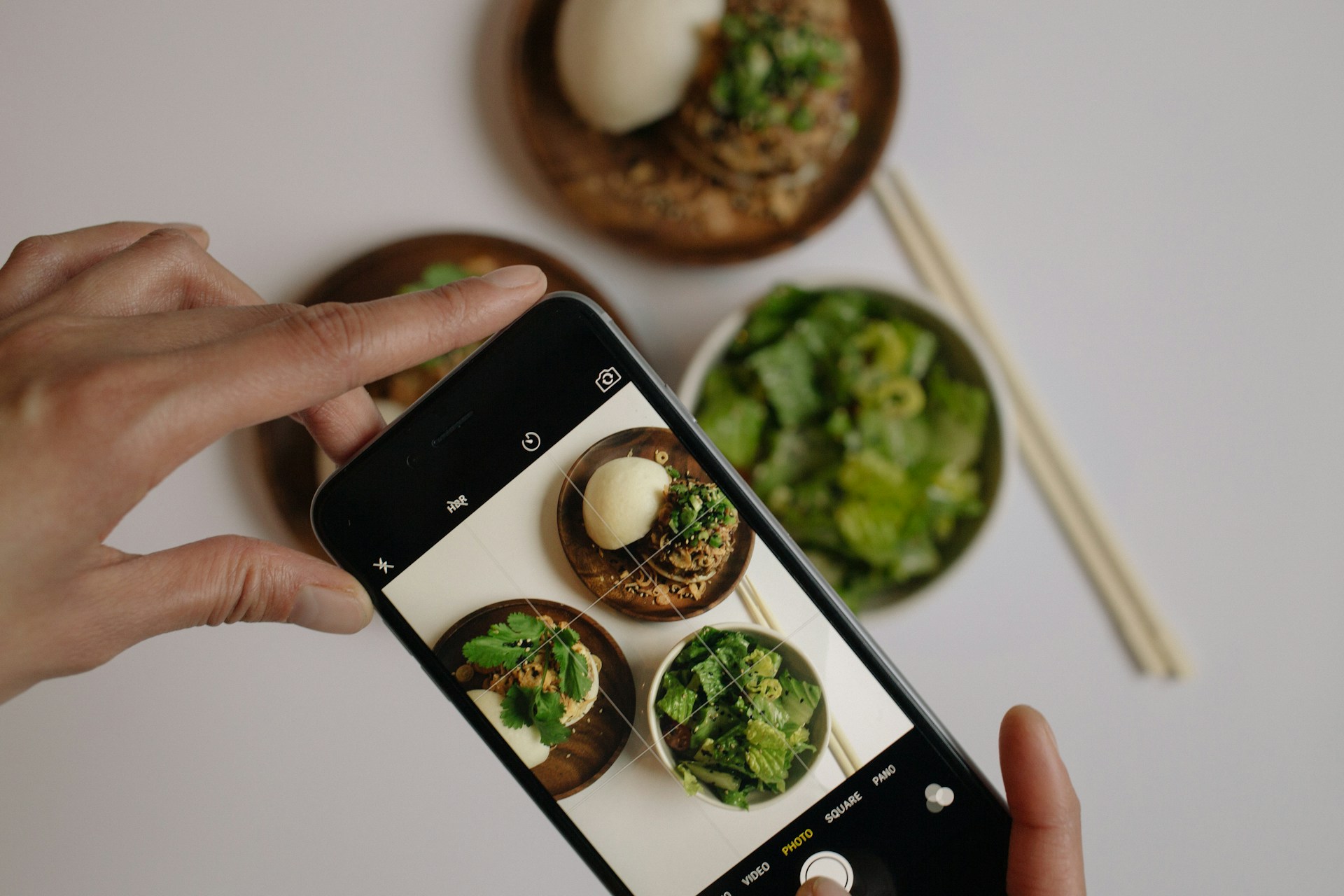
AI photo calorie apps are quick and good at recognising food, but a photo on its own often comes in low. In early results from NIH researchers, not yet peer reviewed, four popular apps came in 250 to 345 calories low per meal from photos alone. Adding details about what’s in the meal helps. In a separate 2025 study, it cut the average error by about a quarter.
In brief
- In early NIH results presented in July 2026, four popular calorie apps came in about a third low from photos alone.
- When an older version of ChatGPT listed a food in a meal photo, it was right 93% of the time. But it missed about 1 in 7 foods, and thought big meals were much smaller than they were.
- In a test of ChatGPT-5 on 195 dishes, it was about 123 calories off per dish from a photo alone. That fell to 92 with a short description, and 53 with the full ingredients.
- For packaged food, a photo of the nutrition label gives you the maker's numbers instead of a guess.
How accurate are AI photo calorie counters?
They’re good at recognising food and weaker at judging how much of it there is, or what’s hidden in it.
One test of real apps comes from researchers at the US National Institutes of Health (NIH). They gave four popular calorie apps photos of 102 carefully weighed meals. The apps came in 250 to 345 calories too low per meal, depending on the app. Their calorie and fat numbers were both about a third too low. Early findings suggest very high fat (keto) meals were the hardest. Two of the apps did better on higher calorie meals than lower calorie ones. These are early results that other scientists haven’t checked yet.
When researchers showed an older version of ChatGPT 114 meal photos, the foods it listed were right 93% of the time. But it missed about 1 in 7 foods on the plate. Over lots of meals, its calorie guesses averaged out about right. Even so, it guessed the weight too low for about 3 in 4 photos, and thought big meals were much smaller than they really were.
Which meals do photo calorie apps find hardest?
| Easier for a photo | Harder for a photo |
|---|---|
| Foods kept separate, like chicken, rice and broccoli side by side | Mixed dishes, like spaghetti bolognese, curry or stew |
| Food with nothing hidden | Cooking oil, butter, sauces and dressings |
Mixed dishes are hard because a camera can’t pull the ingredients apart, as a 2022 review of food recognition research explains. Take a bolognese: it might use lean or fatty mince, and one spoon of oil or three, and the photo looks much the same.
Having lots of ingredients doesn’t make a meal much harder on its own. In the ChatGPT-5 study below, dishes with more ingredients were only a little harder. What it was told about the dish made a bigger difference.
Portion size can trip things up too. In the ChatGPT study with 114 photos, large meals averaged about 800 grams but were guessed at about 530.
Does adding a description help?
Yes. When researchers tested ChatGPT-5 on 195 dishes, the more it was told, the closer it got:
| What it was given | How far off it was, on average |
|---|---|
| A photo alone | About 123 calories, roughly 30% |
| A photo plus a few details the camera can’t see | About 92 calories, roughly a quarter |
| A photo plus the full ingredients and amounts | About 53 calories, roughly a seventh |
The details were things the camera can’t see: the type and amount of fat, any sugar or sweetener, whether dairy was full fat or low fat, and the type of meat. The researchers gave these in a set format, so a quick note from you may help a bit less. About half the photos came from a recipe website rather than people’s own meals.
Ingredients with no photo did worse than a photo plus ingredients, so the photo still helps. But ingredients alone did better than a photo alone. In this study, the ingredient list helped more than the photo did.
What about packaged food?
Take a photo of the nutrition label instead. The numbers then come from the packet rather than a guess from a picture. You also don’t have to search a food database for the right match. Check the numbers it read look right, then say how much you had, like one bar, half the pack, or 150 grams.
How do I make AI photo calorie counting more accurate?
- Keep foods separate on the plate if you can, or take the photo before you mix them.
- Get the whole plate in the picture.
- Add a few words about anything the camera can’t see: “cooked in a tablespoon of olive oil” (here’s how much of the oil to count), “made with full fat milk”, “5% fat mince”.
- Say how much, if it’s not obvious: “a big bowl”, “two slices”, “half the tin”.
- For anything in a packet, photograph the label and choose your portion.
- Check what the app thinks is on the plate, and fix anything it got wrong.
These help whether you’re trying to lose weight or gain it. Your weight over a few weeks will tell you if your logging is roughly right. We explain how in how do I find my maintenance calories.
Is typing it in more accurate?
We couldn’t find a study that compares typing into an app with an AI photo. But describing food in words does help. In the ChatGPT-5 study, a list of ingredients with no photo beat a photo alone.
People find portions hard to judge, though. In a small 2021 study, 40 people described a lunch they’d eaten in words, using household measures like spoonfuls. Only about half of the portions they described were within 25% of the real amount. That was still better than when they picked their portion from a set of example photos.
There’s more on that study in do you need to weigh food to count calories. We also covered how easy it is to forget things in why do I always underestimate how much I’ve eaten.
Where Ori fits
With Premium, you can log in Ori with a photo and add a note, like “cooked in butter” or “large portion”. For packaged food, you can photograph the nutrition label and Ori reads the numbers from it, then asks how much you had. Ori shows you what it thinks is on the plate before you log it, so you can correct anything it missed. If that sounds easier, you can try Ori here.
Related reading
- Why do I always underestimate how much I’ve eaten?
- Do you need to weigh food to count calories?
- How do I find my maintenance calories?
- Best calorie counter apps in the UK
Sources
- American Society for Nutrition. Your AI calorie-tracking app may be off by 345 calories. ScienceDaily, 26 July 2026. Findings presented at NUTRITION 2026 by researchers at the NIH’s National Institute of Diabetes and Digestive and Kidney Diseases.
- O’Hara C, Kent G, Flynn AC, Gibney ER, Timon CM. An evaluation of ChatGPT for nutrient content estimation from meal photographs. Nutrients, 2025.
- Lucassen DA, Willemsen RF, Geelen A, Brouwer-Brolsma EM, Feskens EJM. The accuracy of portion size estimation using food images and textual descriptions of portion sizes: an evaluation study. Journal of Human Nutrition and Dietetics, 2021.
- Rodríguez-Jiménez M, Martín-del-Campo-Becerra GD, Sumalla-Cano S, Crespo-Álvarez J, Elio I. Image-based dietary energy and macronutrients estimation with ChatGPT-5: cross-source evaluation across escalating context scenarios. Nutrients, 2025.
- Dalakleidi KV, Papadelli M, Kapolos I, Papadimitriou K. Applying image-based food-recognition systems on dietary assessment: a systematic review. Advances in Nutrition, 2022.
A gentle safety note
Ori supports general wellness. It is not medical care. If you have a history of disordered eating, are pregnant or breastfeeding, take medicines that affect weight or appetite, or have a clinical nutrition need, speak with a qualified healthcare professional before changing your intake or weight goal.
Read Ori's Health Disclaimer