
Why Does Your Weight Change So Much From Day to Day?
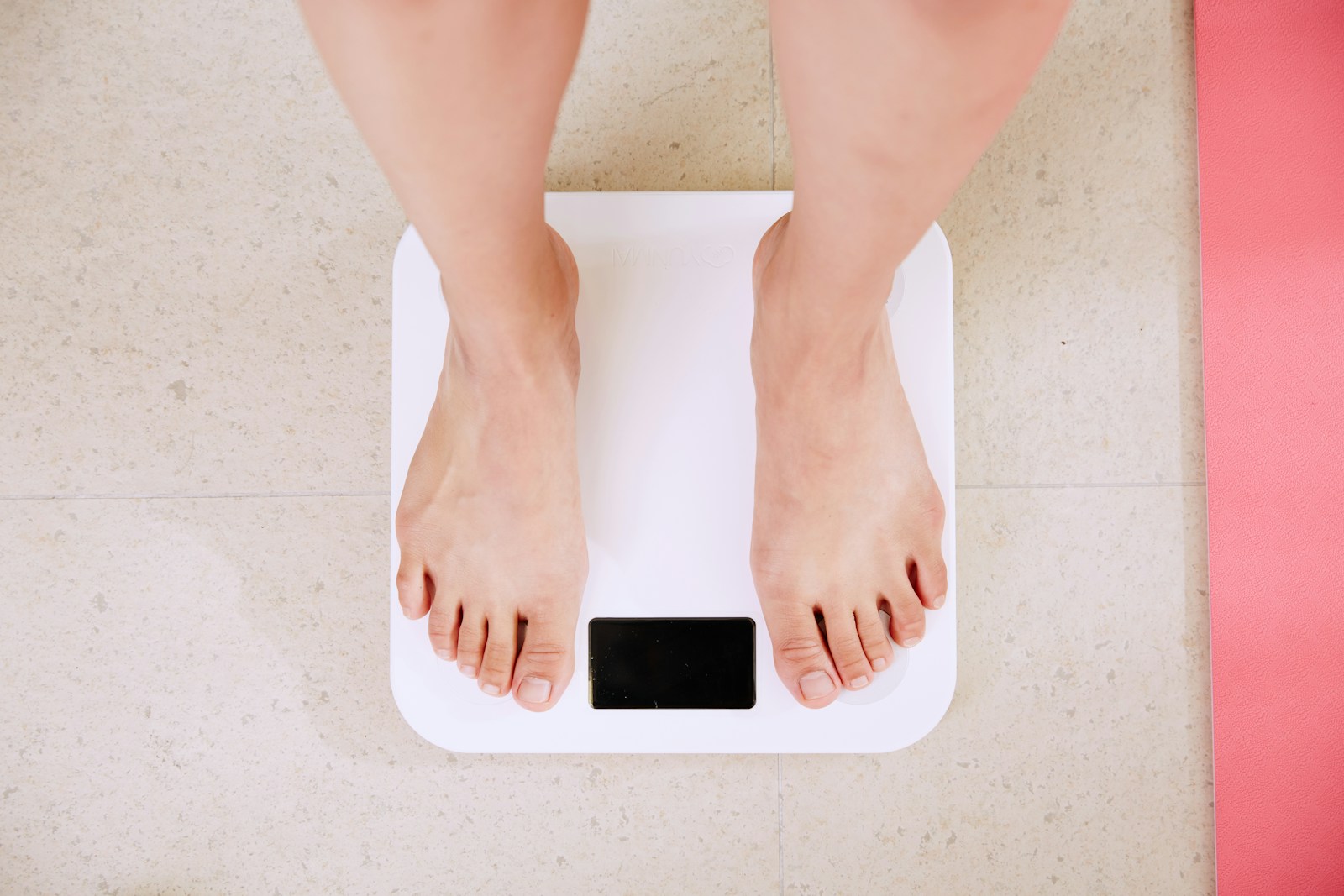
Your weight can jump half a kilo or more overnight, and almost none of it is fat. It’s water, sodium, hydration, hormones, all doing completely normal things. Whether you’re trying to lose weight or gain it, that scary morning number is usually just noise. Not news.
In brief
- A day-to-day weight change is usually water, not body fat.
- Some of it is predictable: weight tends to rise before a period and peak in the first days of it.
- A single scale reading cannot tell you whether a calorie target is working.
- Daily weighing can be helpful for some people and unhelpful for others.
- What matters most is the longer trend, and how seeing the number affects you.
So what’s actually moving the number?
One of the better-known studies on this weighed 28 women every morning for 68 days straight. Day to day, the number moved by about 0.28 kg on average, and it went up almost exactly as often as it went down.
The part worth knowing is that those swings weren’t random. The clearest pattern in the whole study was the menstrual cycle. Weight crept up in the days before a period, peaked around the second day of it, then dropped back over the week that followed. Roughly a third of a kilo up, and a third of a kilo back down, every cycle, with nothing about eating having changed at all.
So if you weigh yourself every morning and the number seems to make no sense, some of it may not be noise. It may be the calendar.
The maths backs up what these swings are made of. A kilo of body fat is roughly 7,700 calories, and nobody is under-eating that much in a single night, and it’s very difficult to overeat that (even professional athletes struggle!). Water, on the other hand, moves around constantly.
Two caveats worth stating plainly. That study is over 60 years old and followed one group of young women living in a university hall, so take the exact figures as a vibe rather than your personal rulebook. And the researchers inferred the water explanation rather than measuring body water directly, so treat it as the sensible reading of their data rather than something the study proved by itself.
Does the same thing happen if you’re gaining?
Yes, this isn’t a losing-weight quirk. Water doesn’t check which direction your calories are pointing before it decides to fluctuate. If you’re eating a surplus and the scale dips one morning, it’s not proof the surplus stopped working.
To be fair, as far as we know, nobody’s run this exact study on someone actively dieting either way. But there’s no good reason water would suddenly start behaving differently just because you changed your target.
Does checking the number every day help or hurt?
Here’s where it gets genuinely murky, and it’s worth us being honest about rather than picking whichever answer sounds nicer.
One six-month study of 91 adults found daily weigh-ins caused no harm at all. A much shorter study in college-age women found the opposite, more negative mood swings, more stress about their weight, lower body satisfaction. However, that second group already had a rockier relationship with food and dieting going in, so the split result isn’t exactly shocking.
There’s no single verdict here, and other similar studies have landed more positively too. If disordered eating, diagnosed or not, is part of your story, none of this research was written with you in mind. A clinician is a much better guide than a blog post, and ultimately, this is a very personal experience!
The bit most tracking apps get wrong
Most apps are good at showing you your weight trend line. This smooths the noise out mathematically and it’s a great way of spotting whether you are hitting your personal goal. But, you still see the raw number every single morning to get there, and that’s the part with actual feelings attached to it.
What this actually means for you
That number moving the “wrong” way isn’t a verdict on your day, your effort, or your willpower. It’s static on the radio, and not some new signal worth reacting to.
This is one of the reasons Look Away exists inside Ori. You simply step on the scale, let Ori quietly read this number for you, and if you combine it with Stealth Health, Ori will never show you the number, unless you want to have a sneak peek (because, we’re human, right?).
We understand that your journey with your weight, be it up or down, is entirely personal and how you feel about it is allowed to change as often as it needs to. Ori’s job is just to keep up, whichever way that goes.
Sources
- Day-to-day variations in body-weight of young women - Robinson & Watson, British Journal of Nutrition, 1965
- Daily self-weighing and adverse psychological outcomes: a randomized controlled trial - Steinberg et al., 2014
- Daily self-weighing compared with an active control causes greater negative affective lability in emerging adult women: A randomized trial - Pacanowski et al., 2023
A gentle safety note
Ori supports general wellness. It is not medical care. If you have a history of disordered eating, are pregnant or breastfeeding, take medicines that affect weight or appetite, or have a clinical nutrition need, speak with a qualified healthcare professional before changing your intake or weight goal.
Read Ori's Health Disclaimer