Does a Calorie Deficit Make You Lose Muscle?
Usually some, yes. How much depends on how lean you are and how fast you lose weight. If you have plenty of fat to lose and go steadily, most of what comes off is fat. If you’re already lean, or you cut calories hard, a much bigger share can be muscle. Strength training, enough protein and a slower pace help you keep it.
In brief
- The leaner you are, the bigger the share of lean tissue you lose. A 2000 research review found this across many studies.
- Losing weight fast costs more. In a 2016 study, people on a very low calorie diet lost nearly three times as much lean tissue as people on a slower diet.
- Dieters who lifted weights lost about half as much lean tissue as those who only did cardio, in a 2017 trial of 160 older adults with obesity.
- Eating more protein kept a little more lean tissue, about 0.4 kg over three months, in a 2012 review of 24 trials.
- If you're already lean, aim for about 0.5 to 1% of your body weight a week, and do proper strength training.
Do you lose muscle in a calorie deficit?
Lean tissue is everything that isn’t fat: muscle, but also water, organs and bone. So not all lean loss is muscle. In the first few weeks, much of it is water, which we explained in why the first week can drop so fast.
Two things make the biggest difference:
- How much fat you have to lose. A 2000 review by the researcher Gilbert Forbes found a clear pattern. The leaner you are at the start, the bigger the share of your weight loss that comes from lean tissue. Someone with plenty of fat to lose loses mostly fat. Someone who is already slim loses a much bigger share as lean tissue.
- How big your deficit is. The same review found that the less you eat, the bigger the share of lean tissue in what you lose. In a 2016 study of 57 adults, people on 500 calories a day lost about 1.6 kg of lean tissue out of 9 kg. People on 1,250 calories a day lost about 0.6 kg out of 8 kg. The gap shrank after a few weeks of normal eating, but the fast group still lost more.
So crash dieting, especially when you’re already lean, can cost a lot of muscle. Eating 1,200 calories a day when your body needs far more is one example.
How can I lose fat without losing muscle?
Lift something heavy, eat enough protein and slow down.
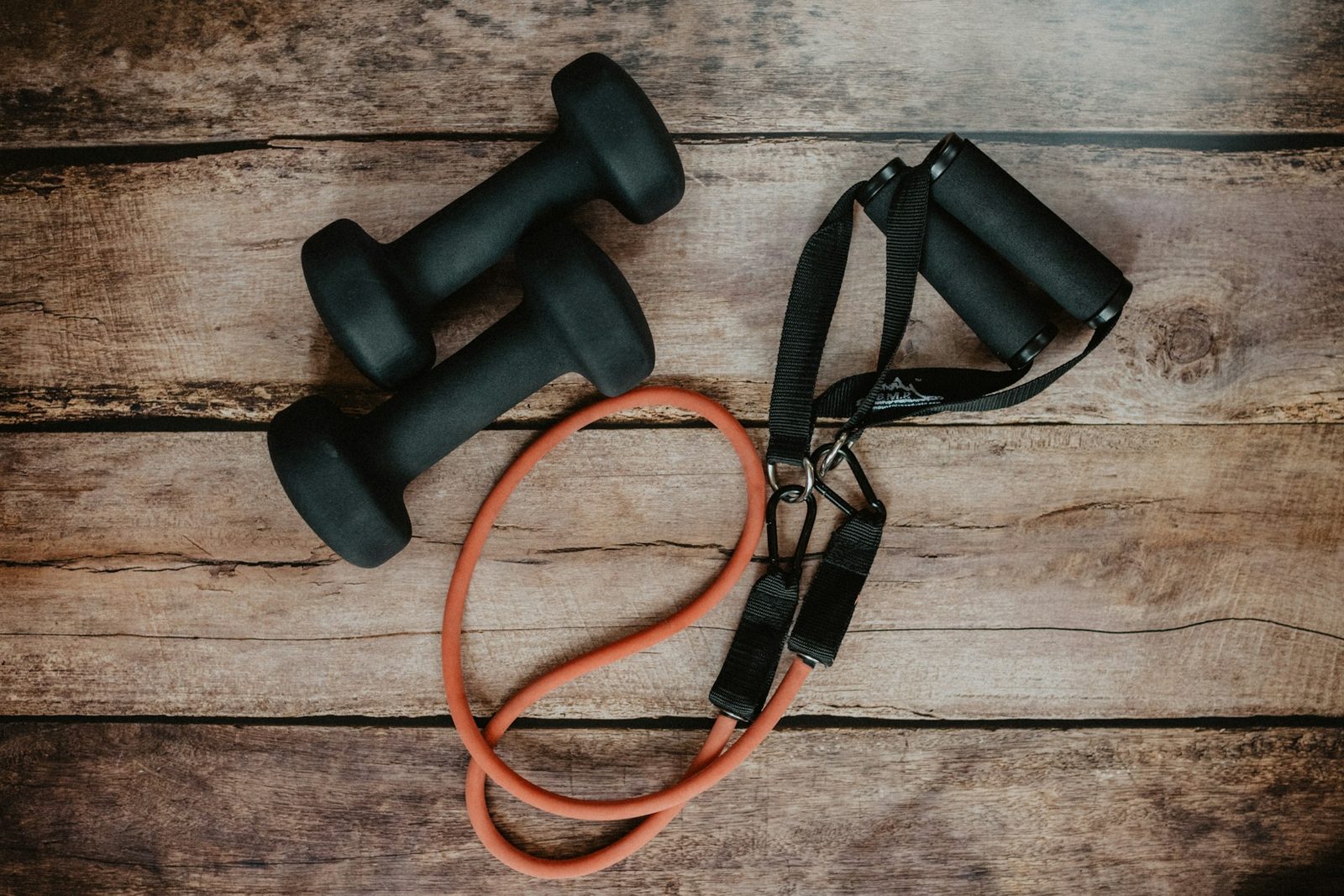
- Do strength exercise at least twice a week. The NHS recommends working all your main muscles on at least 2 days a week, each time until you need a short rest. Weights, push-ups and resistance bands all count. The studies that kept muscle used structured strength training, so if you’re already lean, aim for proper sessions that get harder over time. Walking and cycling help, but not as much.
- Eat enough protein. Eggs, yoghurt, fish, chicken, beans, lentils and tofu all count. In studies of adults over 50, diets with at least 1 g per kg of body weight a day kept more lean tissue. Younger, leaner people who train hard seem to need more. In one study of young men, 2.4 g per kg beat 1.2 g. Having some at each meal is one way to get there.
- Don’t rush. The NHS suggests 0.5 to 1 kg a week for most people. If you’re already lean, with not much fat left around your middle, go slower. A 2014 review for natural bodybuilders recommended 0.5 to 1% of body weight a week to keep as much muscle as possible. For someone weighing 60 kg, that’s 0.3 to 0.6 kg a week. If you’re going faster than that after the first week or two, eat a bit more. Our guide to finding your maintenance calories can help you set a target that fits.
Protein can also help you feel fuller, which we covered in why am I so hungry in a calorie deficit.
How much difference do these habits make?
Strength exercise and protein have the clearest evidence. Most of this research is in older or heavier people, and there’s much less on lean people. The studies measured lean tissue, which includes water, rather than muscle alone.
| What was tested | Who took part | What they found |
|---|---|---|
| Weights vs cardio while dieting | 160 older adults with a lot of weight to lose, over 6 months | All three exercise groups lost about 9% of their weight. Lean tissue fell 5% in those who only did cardio, and 2 to 3% in those who also lifted weights. The weights groups got about 18% stronger. |
| Exercise vs diet alone | 52 studies of adults over 50 with overweight or obesity | 81% of diet-only groups lost at least 15% of their weight loss as lean tissue. Only 39% of groups that also did exercise, mostly cardio, did the same. |
| More protein vs standard | 24 studies, 1,063 adults on diets planned to have the same calories | More protein kept about 0.4 kg more lean tissue and lost about 0.9 kg more fat, over about 12 weeks. A small difference. |
| Protein in older adults | 20 studies of adults over 50 | Diets with at least 25% of calories from protein, or at least 1 g per kg of body weight a day, kept more lean tissue. For someone weighing 70 kg, 1 g per kg is about 70 g a day. |
| Very fast vs slower loss | 57 adults with overweight or obesity | One group ate 500 calories a day and lost about 9 kg in 5 weeks. Roughly 1.6 kg of that was lean tissue. The other ate 1,250 a day and lost about 8 kg in 12 weeks. Only about 0.6 kg was lean tissue. |
| Slower vs faster loss in lean athletes | 24 elite athletes doing strength training 4 times a week | Losing about 0.7% of body weight a week, the slower group gained about 2% lean tissue. The faster group, aiming for 1.4%, gained none. |
How can I tell if I’m losing muscle or fat?
A normal scale can’t tell you, because it only weighs everything at once. A few signs help more:
- Your strength. If your usual exercises feel no harder than before, that’s a good sign, though not proof.
- Your measurements. A tape measure round your waist, or how your clothes fit, shows change that the scale can hide.
If your usual exercises feel harder for a few weeks running, you may be losing too fast. Eat a bit more first. Then check your strength work and protein.
Can you build muscle in a calorie deficit?
Some people gain a little lean tissue while losing fat, especially with regular strength training and plenty of protein. But the clearest examples come from people training very hard.
In a 2016 study, 40 young men ate about 40% less than they needed for 4 weeks and trained 6 days a week. The men eating 2.4 g of protein per kg gained about 1.2 kg of lean tissue and lost about 4.8 kg of fat. Those eating 1.2 g per kg kept their lean tissue about the same. The athlete study in the table above found a small gain too, in the slower group.
Those were young, fit people training far more than most of us, and over a few weeks some of the gain may be water. For most people, keeping what you have is the realistic aim.
Are some people more at risk?
Yes. People who are already slim, and anyone losing weight very fast, lose the biggest share of lean tissue. A slow pace and strength work matter most for them. Muscle also matters more as you age, because it helps with strength and balance. The NHS suggests adults over 65 do activities that improve strength, balance and flexibility on at least 2 days a week.
The studies here weren’t about people taking weight-loss medicines. If you’re on one, ask your prescriber how to look after your muscle.
Losing weight without trying is different. The NHS says it can be a sign of stress or a serious illness, and to see a GP just in case.
Where Ori fits
With Premium, Ori checks your weight trend each week and updates your target as your body changes. If you’re losing more than about a kilo a week, faster than the NHS suggests, Ori lets you know. In the first week or two that’s often water. If you’re already lean, aim slower than the alert, at about 0.5 to 1% of your body weight a week. For a calmer way to keep the pace steady, you can try Ori here.
Related reading
- Why am I so hungry in a calorie deficit?
- How do I find my maintenance calories?
- When will a calorie deficit show on the scale?
- Should you eat back your exercise calories?
Sources
- Villareal DT, Aguirre L, Gurney AB, et al. Aerobic or resistance exercise, or both, in dieting obese older adults. New England Journal of Medicine, 2017.
- Forbes GB. Body fat content influences the body composition response to nutrition and exercise. Annals of the New York Academy of Sciences, 2000.
- Helms ER, Aragon AA, Fitschen PJ. Evidence-based recommendations for natural bodybuilding contest preparation: nutrition and supplementation. Journal of the International Society of Sports Nutrition, 2014.
- Weinheimer EM, Sands LP, Campbell WW. A systematic review of the separate and combined effects of energy restriction and exercise on fat-free mass in middle-aged and older adults: implications for sarcopenic obesity. Nutrition Reviews, 2010.
- Wycherley TP, Moran LJ, Clifton PM, Noakes M, Brinkworth GD. Effects of energy-restricted high-protein, low-fat compared with standard-protein, low-fat diets: a meta-analysis of randomized controlled trials. American Journal of Clinical Nutrition, 2012.
- Kim JE, O’Connor LE, Sands LP, Slebodnik MB, Campbell WW. Effects of dietary protein intake on body composition changes after weight loss in older adults: a systematic review and meta-analysis. Nutrition Reviews, 2016.
- Vink RG, Roumans NJT, Arkenbosch LAJ, Mariman ECM, van Baak MA. The effect of rate of weight loss on long-term weight regain in adults with overweight and obesity. Obesity, 2016.
- Garthe I, Raastad T, Refsnes PE, Koivisto A, Sundgot-Borgen J. Effect of two different weight-loss rates on body composition and strength and power-related performance in elite athletes. International Journal of Sport Nutrition and Exercise Metabolism, 2011.
- Longland TM, Oikawa SY, Mitchell CJ, Devries MC, Phillips SM. Higher compared with lower dietary protein during an energy deficit combined with intense exercise promotes greater lean mass gain and fat mass loss: a randomized trial. American Journal of Clinical Nutrition, 2016.
- NHS. Physical activity guidelines for adults aged 19 to 64. Page last reviewed 22 May 2024.
- NHS. Physical activity guidelines for older adults. Page last reviewed 15 August 2024.
- NHS. Tips to help you lose weight. Page last reviewed 17 March 2023.
- NHS. Unintentional weight loss. Page last reviewed 28 July 2025.
A gentle safety note
Ori supports general wellness. It is not medical care. If you have a history of disordered eating, are pregnant or breastfeeding, take medicines that affect weight or appetite, or have a clinical nutrition need, speak with a qualified healthcare professional before changing your intake or weight goal.
Read Ori's Health Disclaimer