
Why Has My Weight Loss Stopped?
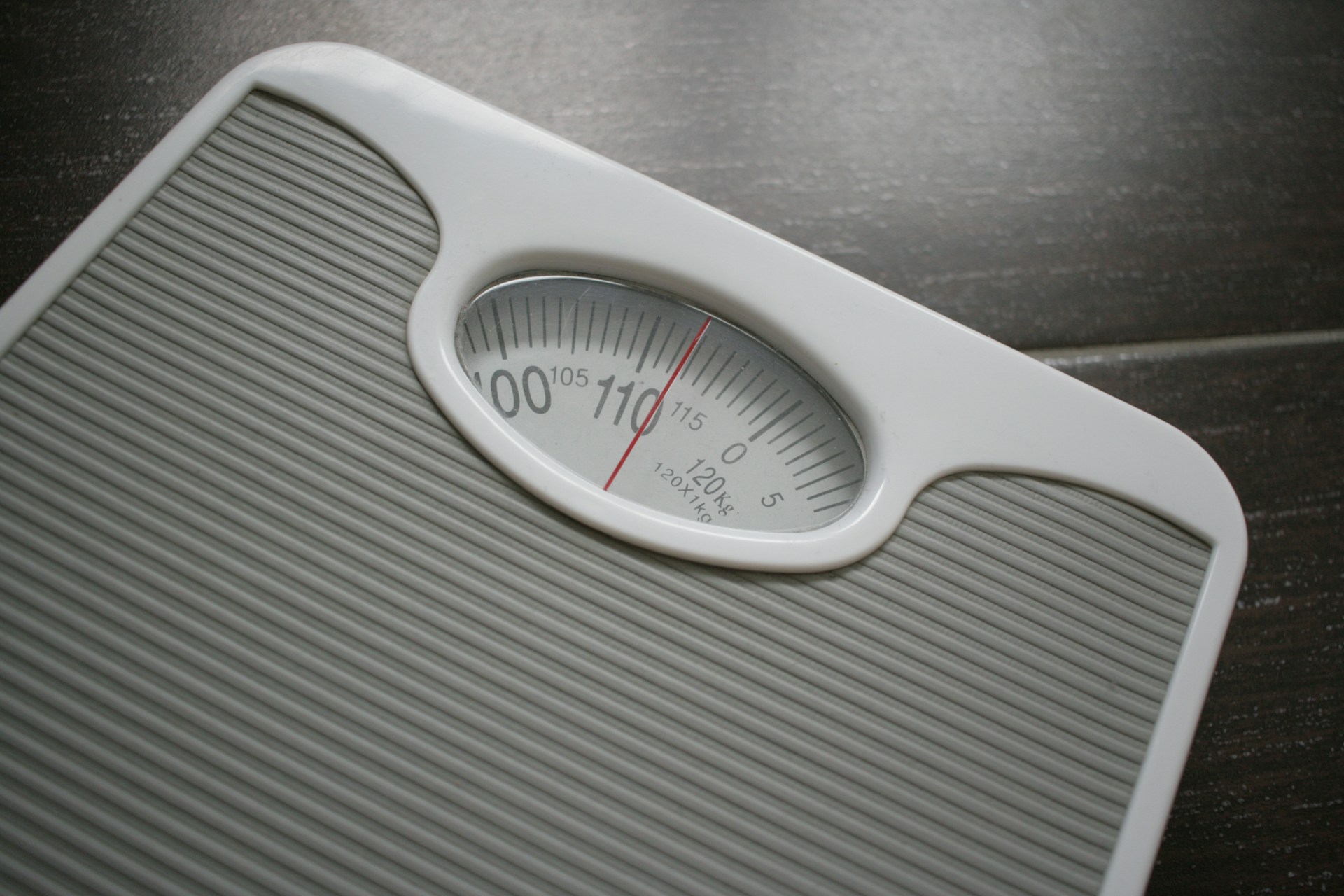
Weight loss usually stalls for one of three reasons. Water is hiding fat loss on the scale. You’re eating a bit more than before, often without noticing. Or your calorie target was set for the heavier body you started with.
In brief
- Weight loss often slows down around six months in. A 2007 review of 80 weight loss trials found this pattern.
- A lighter body needs less food, so a target that worked at the start does less as you go.
- A slower metabolism doesn't seem to be the main reason weight loss stops, according to a 2014 study that used a computer model.
Is it really a plateau?
Probably not, if it’s only been a week or two. Your weight goes up and down every day because of water, salt and food that’s still in your system. For many women, periods cause swings too. These ups and downs can easily hide a week or two of fat loss. We explain more in why does your weight change so much from day to day.
To check, compare your average weight this week with your average from three or four weeks ago. If it’s lower, you’re still losing, just more slowly. If it’s the same, one of the reasons below is likely. We explain why it takes a few weeks to see in when will a calorie deficit show on the scale.
Why does weight loss slow down?
| Reason | What’s happening |
|---|---|
| You’re eating a bit more | Most people go over their plan on some days. Over weeks, it adds up. |
| Your target is out of date | A lighter body needs less food, so your old target isn’t as big a cut as it was. |
| Your metabolism has slowed a little | You burn slightly less than you’d expect for your new size. This doesn’t seem to be the main reason weight loss stops. |
These come from the studies listed at the bottom of this page.
Say you worked out your target at 90 kg. At 80 kg, your body needs less food just to stay where it is. So the same target now gives you a smaller gap between what you eat and what you use, and weight loss slows down even though you’re doing everything the same. We explain more in why your calorie target shouldn’t stay the same for months. Your everyday movement can also drop without you noticing, which we covered in what is NEAT.
This slowing down is very common. A 2007 review of 80 weight loss trials found that people who cut calories or took weight loss medicines lost 5 to 8.5 kg on average in the first six months. After that, their weight mostly stayed level. In the trials that followed people for four years, they were still 3 to 6 kg lighter than when they started. These were older trials, from before today’s weight loss injections.
Have I stopped losing weight because of starvation mode?
It doesn’t seem to be the main reason. Your metabolism does slow a little as you lose weight, but that’s not usually what makes weight loss stop.
A 2014 study tested this with a computer model. A slower metabolism changed how much weight was lost in total, but it didn’t explain why weight loss stopped around six months. A big part of the reason was going over the plan on some days. Everyone does this sometimes. It’s also easy to underestimate how much we eat, which we covered in why do I always underestimate how much I’ve eaten.
How do I start losing weight again?
- Give it three to four weeks, and compare weekly averages rather than single days.
- Log a normal week carefully. Cooking oil, drinks, snacks and portion sizes are the easiest things to miss.
- Update your target for your current weight. If you’ve lost a fair bit, your old target is probably too high now.
- Or take a break at your new weight. Breaks don’t seem to speed up fat loss, as we found in do diet breaks work, but holding steady for a while is a reasonable choice.
- If you’re on a weight loss medicine, ask your prescriber what to expect. If your weight changes a lot for no clear reason, or you feel unwell, see your GP.
What if you’re trying to gain weight?
It works the same way in reverse. As you get heavier, your body needs more food, so the same extra food does less and gains slow down. Some people also move around more without noticing when they eat more, as we covered in what is NEAT. The fix is the same: check your weekly average and update your target.
Where Ori fits
With Premium, Ori looks at your weight each week and updates your target as your body changes, so it doesn’t go out of date. If you’d rather not see the numbers, a setting called Stealth Health hides calories and weight, and tells you in plain words how things are going. If that sounds easier, Ori is here.
Related reading
- When will a calorie deficit show on the scale?
- Why your calorie target shouldn’t stay the same for months
- What is NEAT and why does it change without you noticing?
- Do diet breaks work for weight loss?
Sources
- Franz MJ, VanWormer JJ, Crain AL, et al. Weight-loss outcomes: a systematic review and meta-analysis of weight-loss clinical trials with a minimum 1-year follow-up. Journal of the American Dietetic Association, 2007.
- Hall KD, Sacks G, Chandramohan D, Chow CC, Wang YC, Gortmaker SL, Swinburn BA. Quantification of the effect of energy imbalance on bodyweight. The Lancet, 2011.
- Thomas DM, Martin CK, Redman LM, Heymsfield SB, Lettieri S, Levine JA, Bouchard C, Schoeller DA. Effect of dietary adherence on the body weight plateau: a mathematical model incorporating intermittent compliance with energy intake prescription. American Journal of Clinical Nutrition, 2014.
A gentle safety note
Ori supports general wellness. It is not medical care. If you have a history of disordered eating, are pregnant or breastfeeding, take medicines that affect weight or appetite, or have a clinical nutrition need, speak with a qualified healthcare professional before changing your intake or weight goal.
Read Ori's Health Disclaimer